How to Make Your Point Stick
By Laine Geary
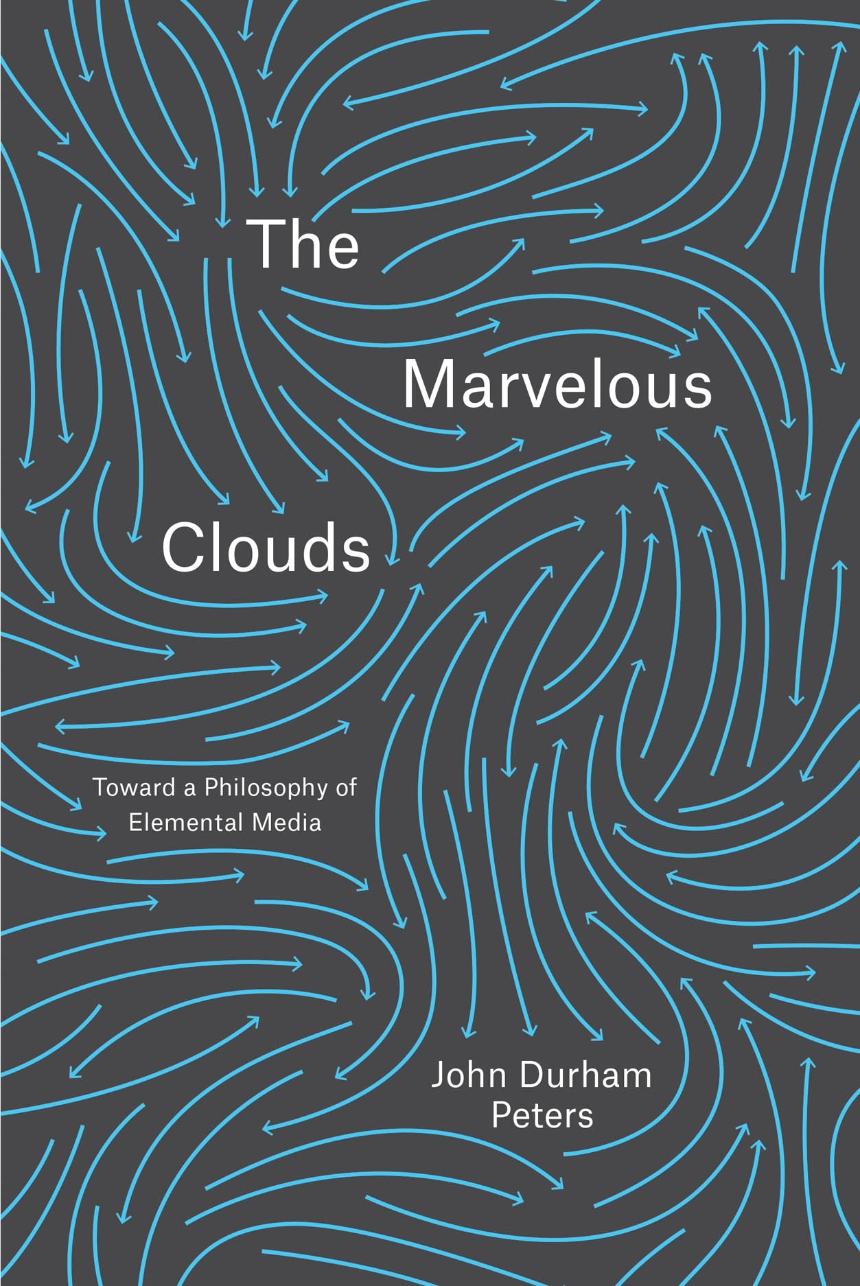
Reading Chapter 6 of John Durham Peters’ The Marvelous Clouds: Toward a Philosophy of Elemental Media again, with five-or-so more years of life experience since graduating, was an interesting experience. Going in, I only remembered a few of the key points Peters made, but as I moved through the text, more came back to me. I remember that after I read through this chapter the first time, I likened Peters’ prose to those from Lance Strate’s "The Future of Knowledge" speech at the University of Sydney. Both Peters and Strate have a way of floating around the topic they are discussing, often making it feel like they are repeating their point unnecessarily, despite there being a clear progression in the "plot" of their messages.
For most of college, I found this method of academic discourse to be tedious to read or listen to; I felt that people using this format were wasting time. As time progressed, though, I found the creative, almost lyrical method of presenting arguments to be far more interesting than papers and speeches that state their point right away. I’ve found hearing the crux of a person’s argument after they explain their reasoning to be far more enlightening than the reverse order. While this is difficult to display using only one passage from this chapter, I believe that the section below, combined with descriptions of my own personal applications of this technique, will adequately get my point across.
"Writing is unquestionably the most "momentous" of all technical innovations in human history. In contrast to spoken language, which seems "hardwired" into the human equipment, writing is a software package that requires installation and constant updates. A toddler with something to say will not ask for pen and paper but will use gesture, facial expression, and the interactive array of oral language… In contrast to speech, writing is difficult, unnatural, and even painful, and anyone who teaches university students knows that fifteen or sixteen years of intense training in the art are usually not enough to master it. Speech is a more or less "natural" endowment of all humans; writing is a technical accomplishment that requires a long apprenticeship" (Peters, 2015).
This passage, appearing on pages 282-283, is just one piece of a thirty-five page argument, claiming that writing is the single most vital technological advancement humans have ever created. As seen above, Peters is arguing that written language is "unnatural", which contrasts with many people’s conceptions of it. Being able to write is taken for granted by many people due to its status as an integral part of our culture. But Peters neatly, if not very concisely, argues the contrary, citing the relative ease with which many people are able to learn oral language when compared to written language.
My point in writing this, as I noted previously, was not to rehash the points Peters already made; rather, I wish to show that having a more "novel-esque" method of writing academically and/or educationally is far more gripping than stating the entire point of your message right away. As science communicator who runs a YouTube channel focused on educating the public on astronomy, being able to convey a point in an easy-to-absorb sort of way is a high priority of mine. Due to the fairly short attention span of many people who are just browsing YouTube, I can’t often present my points in as long a format as Peters or Strate. I need to keep my arguments and fact-presentation concise. That being said, I have found that, beyond being more fun for me to write and produce, the videos where I present the facts throughout the video and then describe my conclusions towards the end do a better job of imparting the information I’m providing to those who don’t know a ton about whatever I’m discussing.
Like I said, I can’t just blather on endlessly; that I save for ranting to my friends about whatever new and exciting astronomical news I find. When trying to provide easily digestible, educational content for those who don’t know much about whatever topic you are discussing, I have found more success when building my point throughout my videos rather than only stating it in the beginning.